
Author’s Note: Some of my musings below were shared before Beijing and Sochi, but I’m recycling a bit because it’s good for the planet.
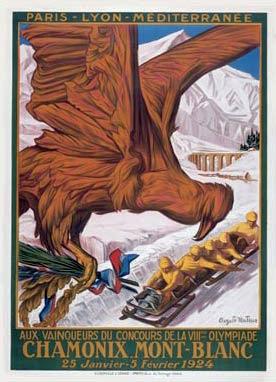
The XXV Winter Games start next week! Opening Ceremonies are Friday, although preliminary heats in Mixed Doubles Curling start on Wednesday. Most of America’s curling athletes come from Minnesota, including Team USA’s mixed doubles team, and Minnesota could use some extra cheering right now, so get in there! Fun Fact: All of Team USA’s Mixed Doubles athletes are named Cory (Cory and Korey)… those long winter nights must just fly by. How can you not watch a team where people have the same name? Mixed Doubles Curling is to Curling what Rugby Sevens is to regular Rugby—half the people but the same size of the field.
Since I brought it up, let’s just look at what we can expect in Mixed Doubles. You may recall that the plucky team from Italy surprised the favored Norwegians with the first ever curling medal for Italy in Beijing 2022. That same pair went 9-0 to win last year’s world championships, and the female half of the team, Stefania Constantini, hails from…wait for it Cortina! Guess where the Curling stadium is… Cortina! The Mixed Doubles Italian gold-winning pair will also be the flagbearers for Italy in Cortina. So you can think of Constantini and Mosaner as the Simone Biles of Mixed Doubles Curling: the ones to beat. Boy, the Cory/Korey’s are going to have an uphill battle against that powerhouse Italian team.
I hear you scoffing, my friends, but you have to remember one of the Kajmeister Olympic Rules: All sports are interesting if you know the rules and the backstory of those competing. Curling started at the Games back in 1924—more on that shortly. But let’s briefly recall how these winter games all got started.
Victor vs the IOC
The Winter Olympic Games are an international sports competition invented by the Swedes and Norwegians, augmented by the French, Italians, and Austrians, and then recently expanded to include the crazy sports favored by the Americans. The Canadians snuck in there much earlier to become powerhouses as well.
But the Games originated in Scandinavia, which makes sense since Aloof is Swedish for “downhill.” I kid: Aloof is Dutch for windward, though I don’t think Hans Brinker was all that chatty either. Also, don’t forget those boisterous orange-heads, the Dutch! People sometimes confuse them with the Danish, but not those who are speed skating or cycling against them. They are formidabel (aka ass-kickers) in those skin suits.
So, as we prepare to cuddle up next to our screens and our apps, to see how the stones are pebbling and the skis are schussing, to watch the Salchows and the Double McTwist 1260s, it’s the perfect time to pause and consider how the games got here.
The engine behind the idea of a winter games was Victor Balck, a Swedish sports enthusiast who was an original member of the International Olympic Committee (IOC). Balck also spearheaded the original International Skating Union (ISU) and brought the summer Olympics to Stockholm in 1912. But his biggest legacy is probably in creating the first rival to the Olympics, the Nordic Games of 1901. At the time, the summer Games were still groping their way forward, having had one successful turn in Athens (1896) and an unsuccessful staging in Paris (1900).

The IOC and that wily old Frenchman, Pierre De Coubertin, Father of the Games, were dismissive of a second international sporting competition in which there would be no Greek ancestors to inspire classical poetry. Besides, they included the icy sports they liked, figure skating and hockey, in their “summer” games because they were held in April and October. The IOC had no interest or bandwidth to stage a second set of games in the snow, and Coubertin & Co. were especially skeptical when Sweden surrounded their 1901 competition with pageantry, opera, folklore, and a field trip to the newly created, open-air museum in Skansen. It was too touristy!
Hence, the Nordic Games were limited to the Scandinavian countries: Sweden, Norway, Denmark, Iceland, and Finland. While they had their share of inter-country boycotts and political border disputes that would sound familiar to anyone today who can pronounce Kiev, the Nordic Games were successfully held eight times. Even though the Scandinavians didn’t attract other countries, they caught the eye of the Alpine skiing industry, which asked, What’s wrong with tourism?
The IOC, ever jealous of rivals, decided to stage its own international winter sporting gala in 1924, conveniently between the 7th and 9th Nordic Games. This little festival was held in Chamonix, France… France, where the 1924 Summer Games happened to be scheduled. Victor Balck barked that it was encroaching on his Nordic Games turf, but he was told it was simply an “international sports week,” not an Olympics, nothing to see here. Funny, the town of Chamonix didn’t get that memo, because their organizers put up banners around the town, calling it the first Winter Olympics.
Figure Skating, Always Controversial
Balck had another card up his sleeve, though, which was to advance the sport of figure skating. His idea was to turn the showy dance into a sport, which was why the original version included both one-footed “special figures” and a five-minute free skate, with music and choreography. His ISU also governed speed skating, a sport keenly followed by the Dutch and Norwegians, and speed skating became one of the original Nordic Games and Olympic Games events held for over a century.

One fascinating footnote in figure skating was the early performance of British female skater Madge Syers. The 1902 ISU World Figure Skating Championships in London only had one event: Individuals. Women were not supposed to compete, but nobody thought to bar them from entering, so Syers entered and came in second. She was beaten by another famous name–Sweden’s Ulrich Salchow. By the time figure skating was added to the London summer Games in 1908, women were segregated into their own Individual category. Syers won that as well, earning the first gold medal in Ladies’ Figure Skating.
Team USA figure skating has assembled perhaps its best team in living memory, with potential medalists in Women’s, Men’s, and Ice Dancing. (U.S. Pairs not ranked in top five, but they are on the Team event, and they have to compete well enough to help the whole team, so let’s root for them, too).
The Scots Invent Yet Another Crazy-Assed Pastime
Skating (and hockey) weren’t the only icebound sports. One of the oddest was invented by the Scots. Since they also came up with golf, the shot put, water polo, and log-tossing, it’s clear that they find their chilly crag of a terrain strangely inspiring. Some think of Curling as pretty much the winter version of golf, so no wonder the Scots invented it, back in the 16th century.

The first Olympic curling event was staged in 1924, and a team from Scotland did win, officially listed as the British team, of course. It’s a bit of a Curling Controversy that the competition played in 1924 was labeled for many years as a demonstration sport, which meant that the winning team didn’t get medals. In 2006, after an inquiry by the IOC, the 1924 event was upgraded and the “British” team–from New Caledonia–received gold medals after all.
The U.S. Men’s team pulled off a gold medal upset in 2018 but just missed the podium (4th) in 2022. Team USA has some work to do as we are ranked sixth. Sweden and Switzerland are the teams to beat on the Men’s and Women’s side, respectively. But don’t count out the Italians because there is an Olympic “home court” effect.

On the Slopes
In the first few Olympiads, the ski events were all Nordic, all the time—different variations of cross-country skiing plus ski jumping. Biathlon, a combination of shooting and cross-country skiing, is always mentioned along with its use as a wartime skill, with the Finns or Norwegians fighting off the Russians…er.. the athletes from Russia who have signed affidavits that they are not in the military or supporting the war in Ukraine, I should say.
Because lead changes happen frequently, biathlon is one of the more exciting of the cross-country sports.

I’m less enamored of ski jumping, especially since of its long-term bias against women jumpers. While Scandinavian women were famous for jumping as early as their male counterparts–I mean, look at the poster!--they were banned from Olympic ski jumping until as late as 2012. I tackled this before you may recall. Note that, EVEN NOW, women still ARE NOT allowed to compete in Nordic combined. How do you say ridiculous in Italian?
Some of this bias also came from the Norwegians, who were unexpectedly chauvinistic in their early sports history. One of their greatest multi-sport champions was Laila Schou Nielsen, who was told after winning both speed skating and cross-country events that it wasn’t really women (especially after she beat a few men). Getting the cold shoulder from the Nordic event community, she entered the 1936 Garmisch-Partenkirchen games in the Alpine combined (downhill + slalom) and took a bronze. Afterward, she became a champion handball player.

Still, women’s participation in the winter Games has slowly been advancing, and one of the exciting developments in the past few years is many added Mixed Team events. Not only is there a mixed team Curling event, but also a relay in Biathlon, Luge, Short-track speed skating, Ski Jumping, Freestyle Ski Aerials, and Snowboarding.
Oh, but don’t forget the latest demonstration sport, which also has a men’s, women’s, and mixed team relay: SKIMO!
Make Way for the New Sports
While the Olympics of yesteryear may have rested on the misty-eyed dreams of Greek wrestlers or even war veterans, reminiscing about WWII, the IOC has come to be keenly interested in the popularity of winter sports. While there’s always the issue of “gigantism” since the 1950s the IOC still has added whatever is new and popular. This has always been true, so there’s no use now claiming that they are pandering; the IOC only added the Alpine events when the games were first staged in the Alps. In the U.S., the huge popularity of X Games events prompted the winter contests to embrace an influx of X-Games winter versions. I’m all for it, although I draw the line at snowmobile racing which, thankfully, is not an Olympic sport.
You know about snowboarding, half pipe, snowcross, freestyle aerials, moguls and all that—really all that has become pretty old hat. The “Flying Tomato,” Shaun White turns forty this year, can you believe it? In the news, by the the way, “veteran” Chloe Kim (25, previous medalist) separated her shoulder competing in the half pipe just a few weeks ago, but supposedly she’s “good to go.”

But one new sport I’m keenly anticipating is SKIMO, also known as Ski Mountaineering. You thought you’d seen it all? Try skiing UP the mountain, then taking off the skis to climb to the rocky summit (with skis on your back), then put skis back on, and race downhill. These races are pretty short—sometimes very short at least than 15 minutes. You start panting just watching them toe up in deep drifts of snow.
Our athletes are in the mix, though Team USA is pretty new to the sport, so I don’t expect medals. The Alpiners, the Italians, Austrians, and Swiss, are going to go at it, you can bet. SkiMo takes places near the end of the games on Friday the 19th and Saturday the 21st, so don’t exhaust yourself before it gets here.
Follow the Peacock
The worst thing about this year’s games for American sports fans is the time difference. Milano-Cortina is 10 hours ahead of U.S. time zones, so competitions will be over by the time they are aired in prime-time. So what? In today’s global environment, results are tweeted the instant they happen, so it’s nearly impossible to shield yourself from a live result.
Actually, the other worst things are the incessant ads, cheating, complaining, over-coverage in general, under-coverage in general, and those flipping medal counts. My cousin said mildly, “I’ve been kind of turned off for various reasons…” I don’t blame him. There a hundred reasons to hate the Olympics, but a thousand to love them. They are the only international sports festival going, and they are a mess because they are populated by people, and people are a mess. But when that five-time medalist wins once more, he’s gonna cry like a baby, and I will, too.
Peacock will have the replays. They often annoyingly show icons with “snippets of wins” ahead of those Replays, so you may just have to grind your teeth that you always know the outcome even before you see what happened. Another Kajmeister Sports Rule: It’s not about the win; it’s about the how. The Super Bowl will take place in the afternoon of the first Sunday of the Games, but key events like the Women’s Downhill and the end of Team Figure Skating, will have already happened. So, while you’re sitting around waiting for the football game, you could pop in and watch the replay of Mixed Relay of the Biathlon, since it will be finished by 9 am PST/noon EST. It’s Biathlon Baby!
My last shout-out here is to Wikipedia. If you Google or AI a question about the Olympics, it’s 90% certain that bot is going to extract the data from Wikipedia. Just go to the source, and bookmark those pages. The Wiki folks are, like me, super Olympic nerds, and as an Olympic researcher, they have earned my unending praise for the way they set up Olympic sites. Super well organized, everything you want to know. They are ready; test it out—look up your favorite competition now (e.g. “Figure Skating at the 2026 Olympics” or “Ice Hockey at the 2026 Olympics Women’s Tournament”). They’ve already got the competition schedule up, ready to fill in the brackets, results, and the scandals.
The Torch is in Val di Fassa today, making its way. Ceremonies start next week. Can’t wait!
